
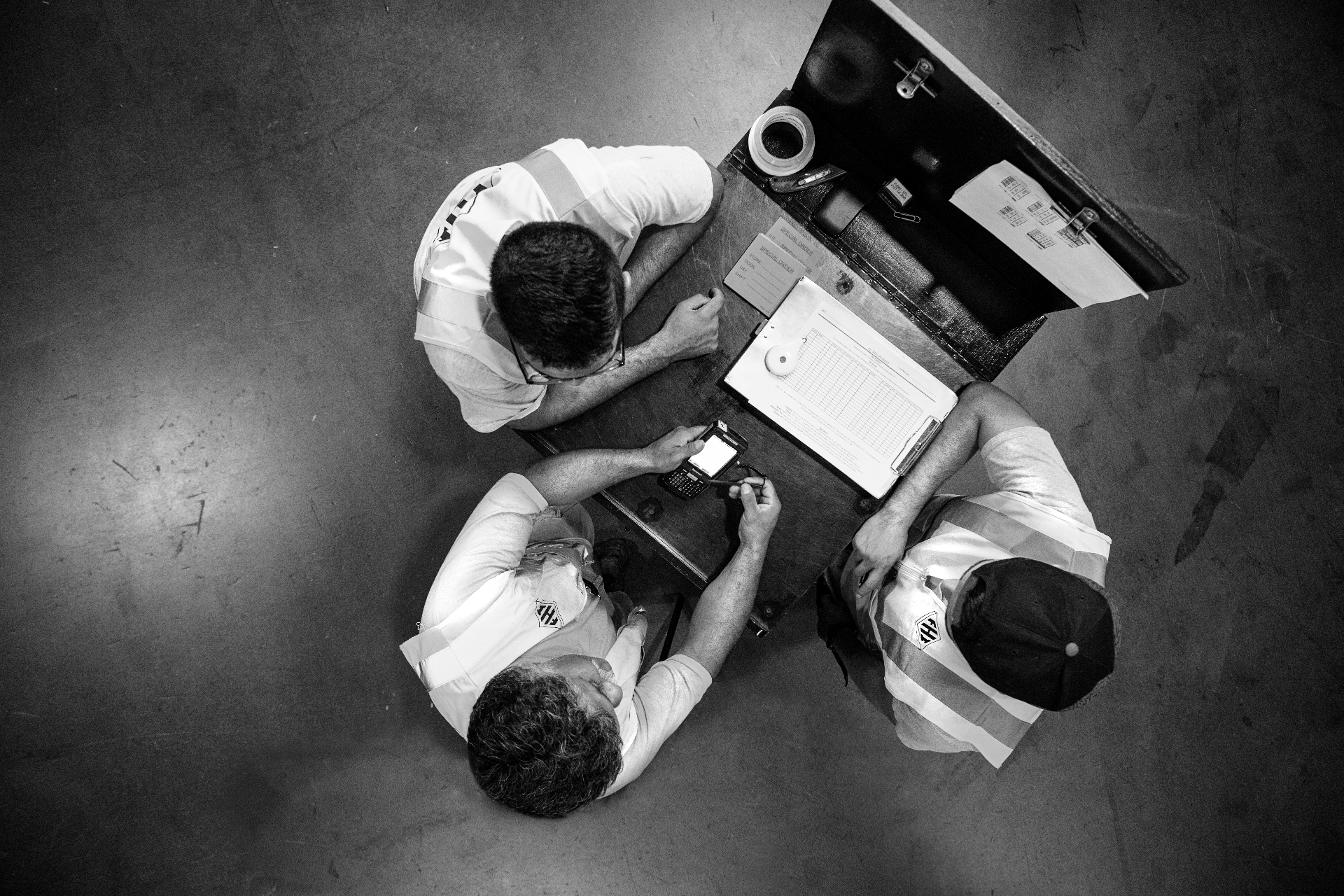
Building accountability with hourly warehouse teams involves setting clear expectations, providing consistent feedback, and establishing fair consequences when standards aren't met. It requires supervisors to communicate performance targets, regularly check in on progress, and hold team members responsible for their contributions to team goals and operational efficiency. This approach helps create a culture where everyone understands their role and takes ownership of their work.
The Problem: Inconsistent Accountability
As a frontline supervisor in a warehouse, logistics, or manufacturing environment, you know the frustration of inconsistent accountability. Perhaps you've seen team members miss targets without consequence, or tasks fall through the cracks because no one felt truly responsible. When expectations aren't consistently met, it can lead to missed deadlines, quality issues, and a general feeling of unfairness among those who consistently deliver. This isn't just about individual performance; it impacts the entire team's morale and the operation's overall efficiency. Without clear systems for accountability, good intentions often falter, and performance standards can erode over time.
Why This Is Hard: The Complexities of Frontline Leadership
Leading hourly teams in fast-paced operational environments presents unique challenges. You're dealing with varying skill levels, diverse motivations, and often high-stress situations. It's not always easy to deliver difficult feedback, especially when you value team harmony. You might worry about demotivating someone, or perhaps you feel the pressure of an already lean team and can't afford to lose anyone. Plus, the sheer volume of daily tasks can make it tough to consistently monitor performance and provide real-time coaching. You're not just managing tasks; you're managing people and their contributions to the collective output, which requires a delicate balance of firmness and support. Leadership Laces understands these pressures and the need for practical, immediate solutions.
A Simple Plan: The 4 C's of Accountability
To build strong accountability within your hourly warehouse teams, focus on these four interconnected 'C's. This framework provides a clear path to fostering ownership and improving performance:
1. Communicate Clear Expectations
- Define the 'What': Clearly articulate what needs to be done, the quality standards, and the timelines. Don't assume anything.
- Explain the 'Why': Help your team understand how their individual tasks contribute to the larger operational goals. Connect their work to customer satisfaction or production targets.
- Use Specific Metrics: Whenever possible, use measurable targets (e.g., 'process 50 picks per hour with fewer than 2 errors,' 'complete all daily safety checks by 8:00 AM').
- Confirm Understanding: Ask open-ended questions like, 'Can you tell me in your own words what the main goal of this task is?' or 'What steps will you take to ensure this gets done correctly?'
2. Coach and Check-In Consistently
- Regular Follow-up: Don't just assign and forget. Schedule brief, regular check-ins to see how tasks are progressing.
- Provide Real-Time Feedback: Address issues as they arise, and offer praise for good work right away. Feedback should be timely, specific, and actionable.
- Resource Support: Ensure your team has the tools, training, and support they need to meet expectations. Are there obstacles you can remove?
- Hands-On Guidance: For new or complex tasks, consider demonstrating the process or working alongside a team member initially.
3. Create Consequences (Positive and Corrective)
- Recognize and Reward Success: Acknowledge when expectations are met or exceeded. This can be verbal praise, a public shout-out, or small incentives. Positive reinforcement strengthens desired behaviors.
- Address Gaps Fairly: When expectations aren't met, have a clear, consistent process for corrective action. This should be a progressive process, starting with a conversation to understand the root cause.
- Focus on Behavior, Not Personality: Frame feedback around observable actions and their impact, rather than making it personal.
- Re-establish Expectations: After a consequence, reiterate the expected behavior and offer support for improvement.
4. Cultivate a Culture of Ownership
- Lead by Example: Demonstrate accountability in your own actions and decisions. Own your mistakes and follow through on your commitments.
- Empower Decision-Making (Where Appropriate): Give team members a voice in how tasks are completed, or how problems are solved. This fosters a sense of ownership.
- Team-Based Accountability: Encourage team members to support each other and hold each other to agreed-upon standards. This could involve peer feedback or shared responsibility for outcomes.
- Continuous Improvement Mindset: Frame missed expectations as learning opportunities, and work with your team to find better ways of doing things.
What Success Looks Like: A Reliable and Engaged Team
When you consistently apply the 4 C's of Accountability, you'll see tangible improvements on your floor. Team members will understand their roles better, take greater personal ownership of their tasks, and proactively address problems. You'll notice fewer missed deadlines, improved quality, and a more engaged workforce. Supervisors will spend less time chasing down issues and more time coaching and developing their teams. Communication becomes clearer, trust grows, and overall operational performance becomes more predictable and efficient. This creates a positive cycle where high standards are met, and everyone contributes effectively to the team’s success.
Are you looking to strengthen your leadership skills and build more accountable teams? Take the first step by completing the Leadership Laces Self-Assessment. It’s a powerful tool to identify your strengths and pinpoint areas for development.
If you're ready to explore customized training solutions for your frontline supervisors and operational leaders, don't hesitate to request a Leadership Laces session. We specialize in practical, impactful training designed for your specific environment.
Frequently asked questions
How can I make sure my expectations are truly clear?
To ensure clarity, avoid assumptions. Articulate the 'what,' 'why,' 'when,' and 'how' for each task. Use specific, measurable language and demonstrate if necessary. After explaining, ask the team member to summarize their understanding in their own words to confirm alignment.
What if a team member pushes back on new accountability standards?
First, listen to their concerns. They might have valid points about resources, processes, or workload. Address those issues collaboratively. Then, calmly reiterate the importance of the standard, its impact on the team, and offer to support them in reaching it. Consistency and fairness are key here.
How often should I give feedback?
Feedback should be ongoing, not just during formal reviews. Provide positive feedback immediately when good work is done. For corrective feedback, address issues as close to when they occur as possible, privately and respectfully. Regular, brief check-ins can also serve as opportunities for informal feedback.
What's the difference between consequences and punishment?
Consequences are the natural outcomes of actions – positive for meeting standards, corrective for not meeting them. They are designed to teach and guide towards better performance. Punishment, on the other hand, is often punitive, focused on blame, and can erode trust. The goal of consequences for accountability is always to improve future behavior and uphold standards fairly.
How can I get my team to hold each other accountable?
Foster a team environment where shared goals are emphasized, and mutual respect is high. Encourage team members to provide constructive peer feedback by setting clear guidelines for how it should be delivered. Leading by example in your own accountability and consistently reinforcing team norms will also help build this culture over time.
What if I don't have time for all these steps?
It can feel like a time challenge, but investing time upfront in clear communication and consistent follow-up actually saves time down the road by reducing errors and repeat work. Start small; pick one or two 'C's to focus on. Even brief daily check-ins or quick recognition moments can make a significant impact over time.
Download the Leadership Laces Self-Assessment
See where your frontline supervisors stand in under 10 minutes. Score the gaps that quietly cost you retention, safety, and output.
Bring a Leadership Laces session to your team
Practical, floor-tested training built for warehouse, logistics, manufacturing, and supply chain supervisors.
Free Tool
Not Sure Where Your Frontline Leadership Stands?
Download the Leadership Laces Self-Assessment and use the scorecard to identify strengths, gaps, and next steps in trust, accountability, communication, feedback, and team connection.